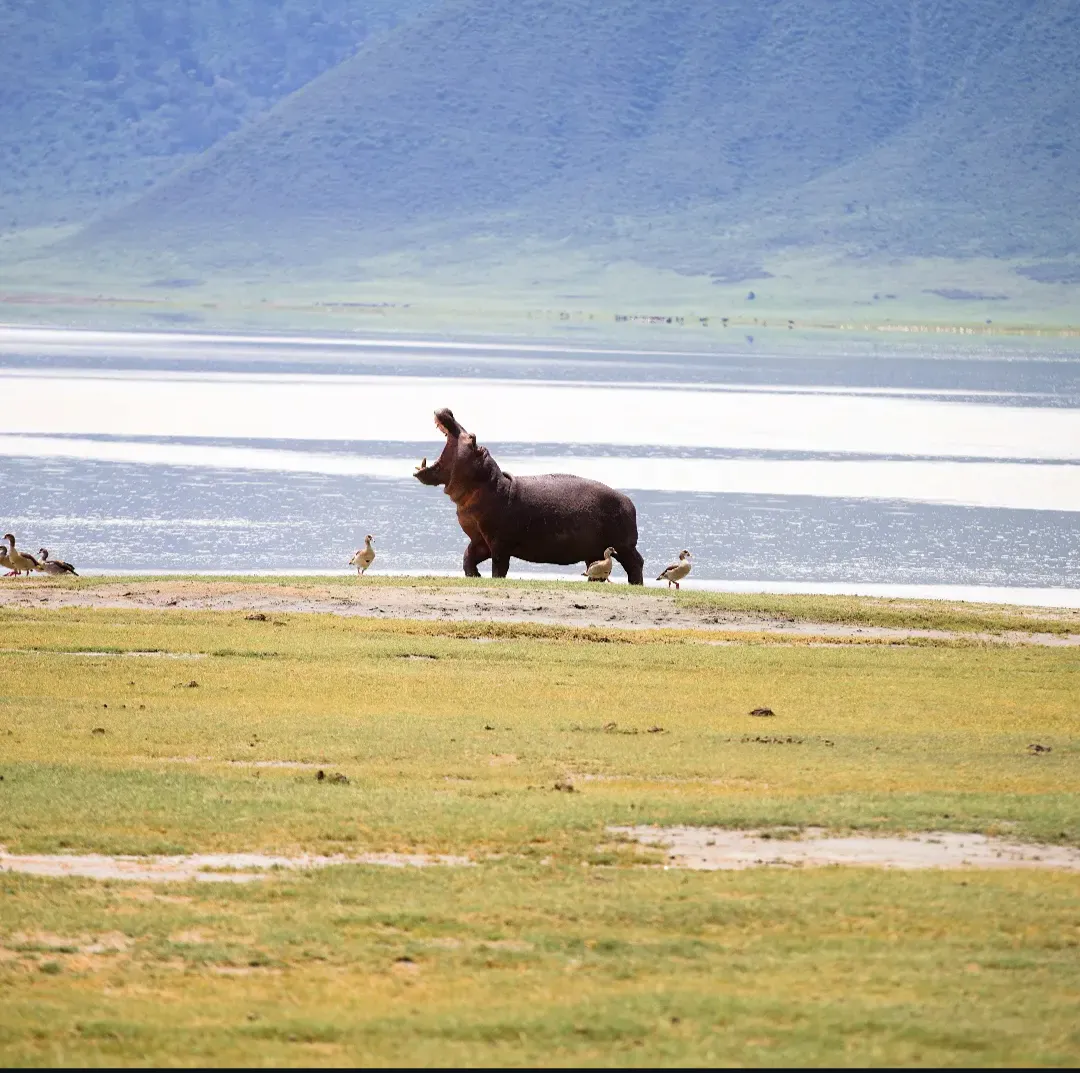
 Photo: supplied by East Africa Trails
 Currencies
Each country has its own currency: the Kenyan shilling (KES), the Tanzanian shilling (TZS), the Ugandan shilling (UGX) and the Rwandan franc (RWF). Tourism services are often priced in US dollars, including park fees, lodge stays and some tours. Everyday costs such as food, taxis and souvenirs are usually paid in local currency.
US dollars
Bring some US dollar cash, mostly in small denominations, for tips and small purchases. Notes should be recent, clean and undamaged, because many places refuse older, torn or marked bills. Large notes typically get better exchange rates than small ones, but small notes are handier for tips.
Cards and ATMs
Visa and Mastercard are accepted at most lodges, hotels and larger restaurants. American Express is less common. In small towns, markets and rural areas, you’ll need cash. ATMs are common in cities and larger towns, and they dispense local currency, often with a limit per withdrawal and a fee. Use ATMs inside banks or malls, and cover the keypad. Tell your bank before you travel, so your card isn’t blocked.
Card payments at lodges may carry a surcharge of a few percent. Ask beforehand if it matters to you.
Mobile money
Mobile money services like M-Pesa in Kenya and Tanzania, and MTN Mobile Money in Uganda and Rwanda, are used widely by locals. Visitors don’t need them, though you may be asked to use one for small payments. Registration requires a local SIM and ID.
Mobile data and SIM cards
eSIM. The easiest option. Buy a plan before you go, install it, and activate it on arrival. Compare data limits and prices.
Local SIM. SIM cards are cheap and available in airports and shops, but you must register with your passport. Safaricom (Kenya), Vodacom and Airtel (Tanzania), MTN and Airtel (Uganda) and MTN and Airtel (Rwanda) have the best coverage. Data bundles are inexpensive.
Roaming. Convenient but often expensive. Check your provider’s rates.
Coverage in national parks is unreliable, and camps in remote areas may have no signal. Download offline maps and tell family that you’ll be out of contact.
Wi-Fi
Most lodges and hotels have Wi-Fi in common areas, but speeds vary. Tented camps may have limited or no Wi-Fi, which is part of their appeal.
Power and adapters
Voltage is 230V across the region. Kenya and Uganda use British-style three-pin sockets (Type G). Tanzania uses Type G and sometimes Type D. Rwanda uses European two-pin sockets (Type C). Bring a universal adapter and a power bank. Camps with solar power may limit charging times, and vehicles sometimes have USB or 12V sockets.
Tipping and small purchases
You’ll need small change for tips. Our tipping guide has typical amounts. Bargaining is normal in markets, and it should be polite and good-humoured.
Avoiding scams
Use ATMs in secure locations, watch for card skimmers, don’t hand your card to anyone out of sight and count change. Use official exchange counters or banks, not street changers. Check taxi fares before you set off, or use ride-hailing apps.
A simple setup
Bring one or two cards, a stash of small US dollar notes, an eSIM, a universal adapter and a power bank. Withdraw local currency when you arrive. Keep cards and cash in separate places.
Frequently asked questions
Should I bring US dollars or local currency?
Both are useful. US dollars are widely accepted for tourism services, tips and park fees. Local currency is better for small purchases, markets and taxis. Bring recent, undamaged US notes in small denominations, since older or torn bills are often refused.
Do cards work in East Africa?
In hotels, lodges, larger restaurants and shops in cities, yes, and Visa and Mastercard are the most widely accepted. In villages and small towns, cash is needed. Notify your bank before you travel, and carry a backup card.
Is mobile data good?
In cities and towns it's good, and it's patchy or absent in parks and remote areas. An eSIM is convenient for arrival, and local SIM cards are cheap but require passport registration. Many lodges offer Wi-Fi with limited speed.
What adapter do I need?
Kenya and Uganda use British-style three-pin (Type G). Tanzania uses Type G and sometimes Type D. Rwanda uses European two-pin (Type C). A universal adapter covers all of them.
Trips built around this
Kenya Classic: Lake Nakuru and Maasai Mara in 7 Days
A seven-day Kenya safari from Nairobi: rhinos and flamingos at Lake Nakuru, then three nights in the Maasai Mara, with a flight back and honest notes on cost.

Serengeti and Zanzibar: 10-Day Safari and Beach Trip
Ten days pairing Tarangire, Ngorongoro and the Serengeti with a flight to Zanzibar, a night in Stone Town and two on the beach. A classic Tanzania combination.
Keep reading

Tipping on Safari in East Africa: Who, When and How Much
How much to tip your safari guide, camp staff, gorilla trackers, porters and Kilimanjaro crew, with typical amounts in US dollars and how to hand them over.
What to Pack for an East Africa Safari: A Practical List
A practical safari packing list: clothing colours, layers, luggage limits for bush flights, gorilla trekking gear, adapters and what to leave at home.
East Africa Visa Guide: Kenya, Tanzania, Uganda and Rwanda
Entry rules for Kenya, Tanzania, Uganda and Rwanda as of September 2026: the Kenya eTA, e-visas, the East Africa Tourist Visa and yellow fever certificates.
Last updated 20 September 2026. Rules, prices and schedules change. We recheck the facts in this guide regularly, but confirm anything that affects your money or your entry to a country with the official source.